Children's magic with sponge balls
A visual comedy routine
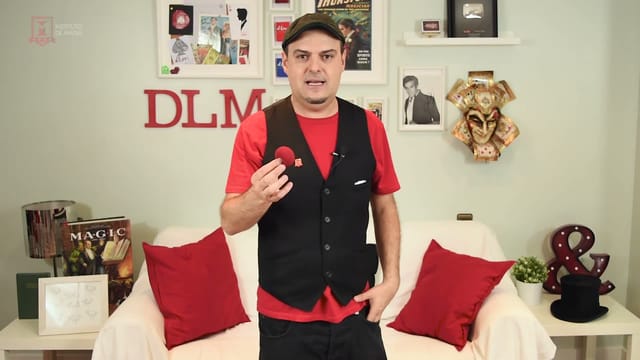
The masterclass develops a sequence of sponge ball productions and a vanish with a handkerchief, featuring comical moments where the balls reappear in the magician's mouth. Iván Santacruz performs the presentation and breaks down the handling, transitions, and organization of the props in the wardrobe.
The proposal combines magic, pantomime, and interaction. It is not just about reproducing movements: it explores what the audience believes at each moment, what gesture sets up a surprise, and why repetition can help children follow the situation. The teacher relates these decisions to an internal script that gives intent to the actions even when not speaking.
Attention, character, and participation
An important part of the explanation deals with performing for children: capturing attention, asking questions, waiting for answers, and giving the audience time to recognize a situation before changing it. The differences between performing in a theater versus a private party are also discussed.
Santacruz talks about wardrobe and character without reducing children's magic to dressing up like a clown. The clothing must fit the performer and allow comfortable access to the props. The class examines how to use pockets, maintain a clear sequence, and prepare a finale that the audience can recognize and applaud.
Props and rehearsal work
The routine explained uses four sponge balls, a handkerchief that contrasts with them, and a thumb tip with adequate capacity. Size and color variants are discussed to improve visibility, along with potential adaptations of the character and the patter.
The handling is explained in the class itself. It is advisable to rehearse the complete sequence, including gestures and audience responses, so that pauses do not depend on having to remember the next move. It is a lesson for anyone performing for children and families.