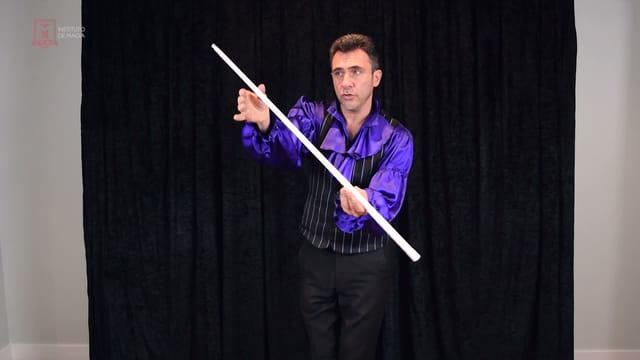
Dancing Cane
A Dancing Cane routine
Adolfo Andrés presents his version of this parlor and stage classic, performed with a vanishing cane that allows for a finale featuring a transformation into a silk. The instruction covers prop preparation, the sleights, and their combination into a musical act.
The goal is to make the cane appear to have a life of its own while the body naturally complements that action. Both technical control and the presentation of the various phases to the audience are examined.
Prop preparation and adjustment
The lesson explains how to prepare the cane for this version and how to check its balance before working on the moves. Materials are compared, and the importance of tailoring the adjustments to the specific cane and your handling style is emphasized.
The class uses visible props during the explanation to make it easy to follow. It also covers the maintenance of the setup between performances and how wear and tear can affect its response.
Moves and transitions
Learning begins with the basic circular movement and rhythm control. Building on that foundation, the following are covered:
- Circular movement while walking.
- Lateral, front, and back movements, with ascending and descending variations.
- Short-travel lateral movement and changes in orientation.
- Foot tap with a spin, drop spin, and hand spin.
- Mime gestures and the travel of the cane around the body.
Each sleight connects to the previous one to build continuous transitions. Common mistakes, recovering balance, and the necessary distances to avoid catching on the body, sleeves, walls, or backdrop are reviewed.
Building the presentation
A sequence is proposed featuring an entrance, opening moves, movement across the stage, changes in intensity, and a finale. The musical choice guides the duration of the sleights and moments of pause; gaze and posture help bring clarity to each phase.
The final transformation into a silk is explained, along with mime techniques to handle any mishaps without breaking character. Other styles of canes and an alternative handling setup are compared as adaptation options.
Materials, conditions, and practice
To follow the main version, you need a Fantasio-type or compatible vanishing cane, a silk, suitable thread, a small ring adapted to the cane, and basic tools to prepare the props. The instructor explains the criteria for selection and adjustment.
You will need clear space for movement, dark attire, and controllable lighting conditions. The class covers the relationship between light, background, and costume, and suggests checking the result from the audience's viewpoint with the help of another person.
The moves are taught from the ground up, but require sustained practice in coordination and sensitivity. It is best to solidify each sleight before combining it with movement and music.