Balance: Cards, a banknote and a tuck case
Balancing pocket objects
Julio Montoro presents this pocket-sized Balance with two bank-card-sized cards and a banknote. They seem to form an improbable balancing structure; a playing-card tuck case can be added as a finishing touch. Everything falls when the performer decides to end.
The lesson includes demonstration, gimmick construction and sequence handling. Montoro explains preparing one card and using it with ordinary objects. The assembly is held during the effect: hand placement and the audience's viewpoint are part of the presentation.
What you need to make
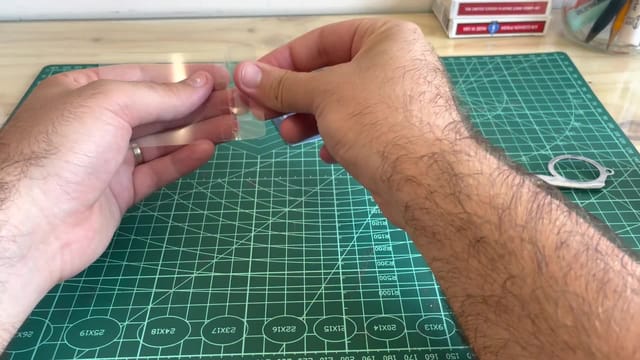
The gimmick uses a card you can cut up or stop using, acetate, double-sided tape, ordinary tape and scissors. The other card and the banknote can be ordinary and borrowed. The example uses a fifty-euro note, but Montoro says another can be used.
Construction shows using the card as a template to cut the acetate, adjust the pieces and join them so they work together. Tape placement and trimming are explained with attention to orientation.
You learn the assembly before adding the other objects. References to other commercial balancing effects provide context for the idea; this version is built with the listed materials and does not require buying those effects.
Preparing and presenting the two cards
With the gimmick made, Montoro explains arranging the objects and entering the working position while talking to the spectator. One card is prepared; the rest can be presented with ordinary objects under the explained conditions.
Learn card placement, maintaining the grip and displaying the balance from the front. He discusses appearing to search for the right balancing point rather than performing as though no attention were needed. That pause gives meaning to what the audience sees.
The explanation also identifies the necessary cover. Building the accessory alone is insufficient: rehearse its placement and the orientation maintained while holding the assembly.
Adding the banknote and case
The next phase adds the folded note. Montoro shows its placement and notes that its low weight helps sustain the structure. He then optionally adds a tuck case to increase the impression of difficulty.
During the explanation, he readjusts the note's fold to give the case a more useful surface. Try this practical detail with your objects, alongside grip firmness and steadiness while displaying the balance.
Spectator participation is also explained: they may hold the assembly from the taught position. This belongs to a specific moment of handling; the tutorial shows how to guide it and retain the effect's conditions.
Ending with a fall on cue
The ending releases the assembly so the objects fall. Montoro reviews the thumb gesture and subsequent recovery of the prepared card. Construction, display and collapse form one sequence to practise from beginning to end.
This lesson suits those wanting a small prepared card accessory and a balancing presentation with pocket objects. It requires construction and rehearsal of positioning, stability, audience angle and the ending. Adjustments and repetitions help identify where your own assembly needs attention.