Gravity: The Deck Cuts Itself to Find a Card
A cut of the deck that reveals the selection
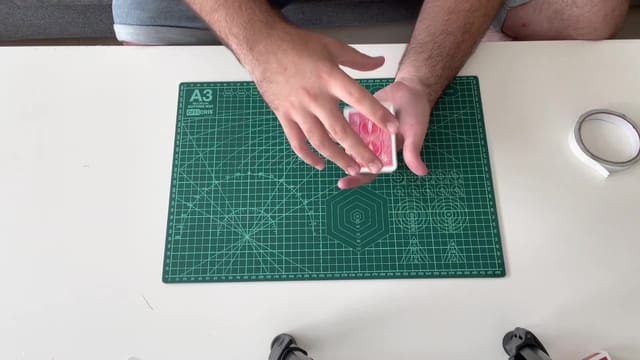
In Gravity, a spectator chooses a card and returns it to the deck; they can also sign it. Julio Montoro presents the search as a demonstration of static electricity: upon bringing a finger close and resting it on the deck, part of the packet lifts, trembles, and ends up falling to reveal the card.
The lesson contains two videos. The tutorial covers the construction and updated handling; the early recording brings together a performance for a participant and a brief explanation of the version at the time. It allows you to compare the initial block with the adjustments in the tutorial, especially the possibility of riffling a portion of the cards.
Crafting with cards and tape
The gimmick is built using ordinary cards and double-sided tape. In the example, a packet of nineteen cards is prepared, which can come from a deck you no longer use. Montoro recommends ensuring that the back design and wear match your working deck so the whole set maintains a uniform appearance.
The explanation covers the layer-by-layer assembly and the placement of the tape, paying attention to squaring the cards. The adjustment that allows the riffle is presented as an improvement contributed by his friend Adri: the way the packet is joined leaves an area available for that display.
Next, work is done on preparing the contact point, how to place and store the set, and the pressure that should be avoided prior to the performance. Protecting the adhesive so it does not get dirty is also discussed. The manufacturing is simple in terms of materials, but takes assembly time and requires testing the response of the accessory itself.
Choosing, returning, and showing the cards
Montoro explains how to start with the prepared packet, perform a shuffle that is compatible with the setup, and offer a card. While the spectator looks at it or signs it, the position for its return is prepared.
The explanation reviews the cut, the placement of the chosen card, and the display with a riffle that allows you to show activity among the cards. It also shows which areas of the deck can be shuffled while preserving the conditions of the effect. The impromptu appearance is part of the presentation; the material is prepared beforehand.
These transitions are repeated so you can follow the card's journey without losing sight of the packet. The practical work lies in coordinating the reception, the squaring, and the displays before starting the visual phase.
The movement, the fall, and the revelation
The presentation of static electricity includes a hand gesture that Montoro references from Freaky Body Illusions. The gesture is explained in the video and serves as a justification for introducing the movement of the deck.
Next, the action of the finger, the vibration, and the fall of the packet are developed. Montoro compares ways to move it and catch it, including a retrieval in the hand that allows you to transition into the riffle and the revelation of the card. Both the visual moment and the actions that finish it off are thus studied.
The preferred surface is a table; the possibility of using the spectators' hands when a table is not available is also discussed. The explanation allows you to identify the conditions for each performance, without turning the trick into a completely unprepared deck.
Rehearsal and maintenance
The response of the adhesive changes with use. Montoro discusses its periodic replacement and shows movement adjustments when the contact area is more worn. It is best to rehearse with the same deck and test the effect before performing it, rather than taking for granted that any tape or card combination will respond the same way.
This is a lesson for anyone who wants to craft a card magic gimmick using ordinary materials and work on a visual location. The comparison with the early version provides context for the handling changes; the updated tutorial focuses on the preparation, performance conditions, and transitions to reveal the selection.