The Polo Packet Reconstitution
From a Half-Empty Packet to a Full One
Julio Montoro shows a packet of Polo mints that seems to have only a few pieces left and visually makes it reconstitute until it regains its full appearance. The lesson focuses on building the gimmick that produces this change, performing it, and getting rid of it to end by showing the real packet. The effect explained is the apparent reconstitution of the packet, not a routine to link or restore individual mints.
Julio shares that he developed the idea alongside Víctor Sanz. The explanation for this lesson is led by Montoro, who builds the assembly on camera and keeps the adjustments and corrections he makes along the way in the tutorial.
Building from Scratch and Adjusting the Shell
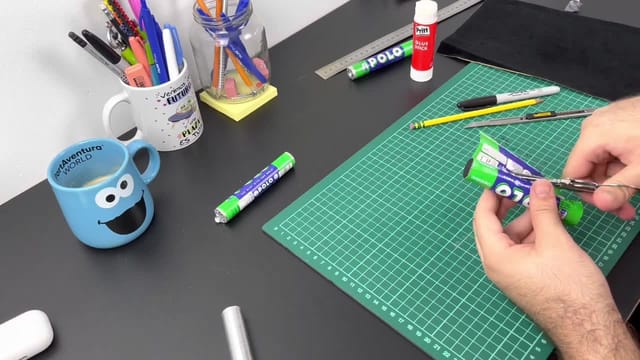
The materials list is corrected at the beginning: three Polo packets are needed, along with black cardstock, self-adhesive felt of the type used for Black Art, adhesive tape, and cutting, scoring, and gluing tools. The tutorial shows how to measure the packet, prepare a shell, reinforce its edges, and make sure the container goes in and out without the whole thing falling apart.
The fit plays an important role. Julio builds a first version that is too tight, takes it apart, and remakes it with more room. He explains why you shouldn't build up thickness inside and tests the result before continuing. You will see the actual process of building and correcting, not just a finished gimmick with measurements assumed to work for any container.
Next, he develops the parts that create the appearance of an incomplete packet: using the wrapper halves, placing the black felt, and the reinforcements that keep the pieces in position. He adds a paper detail that simulates the opening of the packet and finishes by showing how the complete assembly fits with the container that will be used at the end.
Materials and Black Art Conditions
Besides the three packets and the black materials, you will need adhesive tape, glue, a pencil or marker for marking, a ruler, a utility knife, and scissors. During assembly, he uses a glue stick and mentions double-sided tape as another construction option. These are materials to prepare the gimmick, not a commercial trick you need to buy ready-made.
The recommended version is performed wearing a black t-shirt and with the audience positioned directly in front. The black background plays a role in the illusion that part of the packet is missing, which is why orientation and coverage are not secondary details. Julio shows an alternative way to hold it so you don't have to wear a black t-shirt, but notes that it is not his recommended option. The lesson does not promise that both conditions will yield the same result or that the effect can be viewed from any angle.
Presentation, Change, and Cleanup
The handling includes how to hold the assembly, pretend a mint comes out, and display the half-empty state. Julio explains the twist during the shake, the elevation accompanying the change, and the cover of the hand. He also teaches how the inner packet is removed and how to keep the gimmick concealed to finish by showing the full packet.
The clean finish depends on this retrieval. The statement that the packet can be examined refers to the final result, not handing out the shell and prepared assembly at any point during the performance. The moves relate to the audience's point of view and the parts that must remain covered.
A Hands-On Crafting Project
The explanation itself warns that the gimmick is labor-intensive and recommends watching the entire video first before starting to build. The main difficulty lies in preparing and adjusting the pieces; afterwards, you will need to practice the handling and cleanup with the finished assembly. The construction and application of the Black Art principle to this gimmick are explained without requiring you to have purchased another set to follow along.
It is a lesson for anyone who enjoys crafting props and wants to understand both the mechanism and its performance conditions. It includes the trial-and-error process, the finishes, the visual change, and the final disposal; it is not an impromptu demonstration with an unprepared packet.