Visible Actions in Card Magic and Learning Through Mistakes
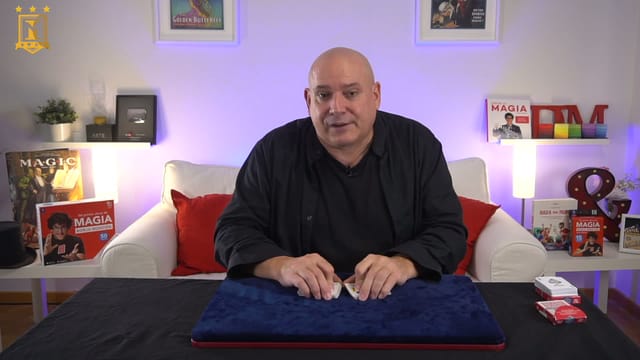
Willy Monroe analyzes the difference between the actions the audience sees and the sleights that must remain hidden. He proposes four visible actions to study the construction of card magic: spreading, cutting, shuffling, and dealing. From these, he examines how to present an effect with clarity and how to make the most of discoveries that happen during practice.
Four Visible Actions
Spreading includes displaying cards on the table, opening a fan, or running a small packet between the fingers. Ascanio's Spread serves as an example of a spread whose outward appearance can be maintained while a sleight is being incorporated.
Cutting allows you to separate and reunite packets. A distinction is made between a cut that preserves the circular sequence of the deck and a combination of packets that alters their order. Forces and palms illustrate sleights that can be integrated into a visible cutting or spreading action.
Shuffling can be done on the table or in the hands. The class discusses how shuffles and cuts allow you to control selections, preserve certain positions, or give the impression that the cards have been lost. Triumph appears as an example of construction where a shuffle sequence leads to a resolution via a spread.
Dealing covers distributing, transferring cards, and turning them over to show them. Willy uses the double lift and the Elmsley and Hamman counts to explain how a seemingly simple action can conceal a sleight. This is a classification for analyzing handling; not all the mentioned sleights receive a full, ground-up explanation.
Flourishes and Resolving the Effect
We study when a visible skill helps to present or resolve a trick. A toss or a production can add interest to the finish, whereas a flashier action at another moment might draw attention to the method.
The explanation compares flashy resolutions with a simple revelation via a spread. It includes examples of cards appearing during a cut and a reference to Aaron Fisher. The focus is on deciding what the audience sees and what function that gesture serves, without turning every demonstration into a standalone routine.
Learning from a Mistake
The final part suggests observing the accidents that happen during rehearsal. Willy tells how a card that shifted during a one-handed cut allowed him to develop a production. Reconstructing the path and locating the card within the packets turns that accident into something that can be studied and repeated.
Another example stems from the need to turn a card over while keeping another one palmed. The instructor shows how that limitation led him to adapt a handling and explore a double lift variant. This is a demonstration of technical research, not a closed routine with a pre-established final application.
Materials and Practice
You need an ordinary deck of cards and a surface to spread, cut, and shuffle on. The conceptual part is accessible to anyone familiar with basic card handling; reproducing the examples of palms, doubles, and one-handed cuts requires additional experience.
Pick a sleight you already use, identify the action that should be perceived from the outside, and observe whether your moves express it clearly. During practice, also review any errors that produce an interesting result. The class invites you to study their cause and experiment with them, maintaining a relaxed pace and rhythm.