False Cuts: Up the Ladder, Tamariz, Erdnase, and the Hop
False Cuts and Stack Preservation
Manolo Talman presents a selection of false cuts that can be dropped individually into card magic routines or combined into a sequence. The opening demo uses a pre-stacked deck: the ace productions and the final run of suits in order let you see the handling in action.
The tutorial compares the look of a casual cut to a flashier display. You'll learn how to pick a handling that fits your patter and how to back it up with body language, eye contact, and the sound of the packets hitting the table.
The Handlings Broken Down
- Up the Ladder: A sequence of running cuts that looks like a shuffle. We cover the grip, building and covering the steps, packet sizes, and the flow of the move.
- Juan Tamariz's Sequence: A mix of false cuts with different dealing patterns on the table. We work on gathering the packets, timing, and two ways to handle one of the adjustments.
- Erdnase Triple Fancy Cut: We compare a flashier execution with a more casual, contained approach. The explanation reviews how to hold and separate the packets without catching edges or losing alignment.
- Another Packet Multiple Cut: A visual variant tied to the Up the Ladder concept. We examine finger coordination and dividing the work between both hands.
- Erdnase Table False Cut: We look at the connection between hand action, shifting your gaze, and the two rhythmic clicks of the cut.
- Hand-to-Table Cut and Gary Ouellet's Variant: We break down the grips and movements that flow from a cut in the hands right onto the table. The variant adds a more visual handling for a magic routine.
The slip cut makes a brief appearance, used to reveal an ace during the opening sequence. The cuts are presented with their specific conditions and purpose in mind, rather than forcing a one-size-fits-all approach for every trick.
The Hop: Undoing a Cut
This section tackles what to do when a spectator asks to cut a stacked deck you need to preserve. We explain the hop, a neat way to undo the cut without busting out a pass.
The tutorial focuses on packet handling and the casual-looking gesture that smooths out the re-assembly. First, we set up the live scenario, then break down the mechanics to nail the timing and angles.
Review, Troubleshooting, and Naturalness
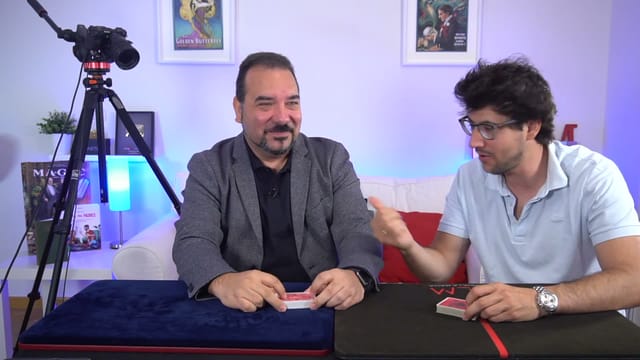
In the second part, Borja runs through several handlings while Manolo fields his questions. The review revisits Up the Ladder, the triple fancy cut, the Tamariz sequence, and the alternate multiple cut. The Q&A highlights real-world snags: messy packets, a death grip, snagging cards, and fingers shifting without a reason.
We explain how to use your fingers to keep the packets squared up and how to cover the steps from the spectator's point of view. Relaxing your hands and keeping the packets close together ties the whole thing together.
The focus is on rhythm, not speed. Start slow to map out where your hands and fingers need to be, then build up fluidity. The sound of the final drop and matching it with your eye gaze are key to selling a normal cut.
Materials and Practice
You'll need a standard deck and a table or close-up mat with enough room to deal packets. A stacked deck is great for checking your work during practice to make sure the stack holds up; the four aces let you copy the applications shown.
It helps to be comfortable handling the deck and breaking off packets. The lesson goes over the grips used so you can drill each move on its own. The real work is checking your alignment, angles, and rhythm before tossing a cut into a routine.