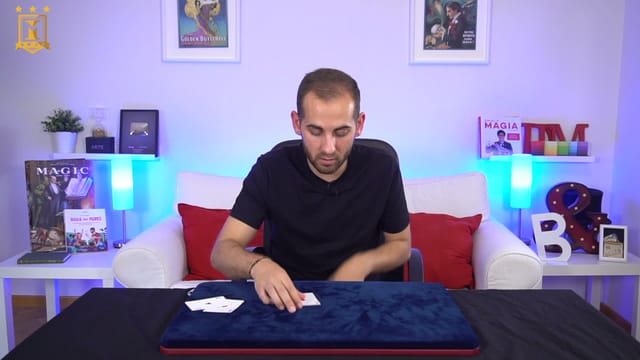
Aces through the table and lap management
Víctor Piña develops an aces-through-the-table routine attributed to Gabi Pareras and uses it to study the coordination of loads, recoveries, and transfers. The masterclass also includes resources to retain, recover, or handle dropped cards left in the lap.
Aces through the table
The four aces seem to penetrate the table one by one: one hand stays on top of them while the other retrieves each card from underneath. The complete performance precedes the analysis of its phases.
The explanation uses the four aces and an extra card. It covers the initial display of the cards, the loads integrated into that display, and how to link each step. Víctor proposes the routine especially as a study exercise because of the coordination it requires and what it teaches about magical construction.
The clarity of the initial setup receives special attention: where the aces are, which hand covers them, and which one goes under the table. The gestures remain consistent throughout the different penetrations to set up the climax.
Setup, loads, and recovery
The diagonal position of the hands, their contact with the table, and the relationship between tension and relaxation are reviewed. Pre-technique allows you to reach the working area within a justified action. The study stresses the importance of having the arms follow the body and maintaining continuity after the load.
To recover a card from the lap, the path of the hand under the table is analyzed. The idea of the "arm's ghost" serves as a reference: the audience must retain a coherent mental image of where the hand is and where the card appears from.
The direction of the exit and the area where the already-transferred aces are deposited are also reviewed. The analysis compares when it's better to show how many cards remain on top versus when to focus attention on the card that has just passed.
Double handling and final transfer
Routine includes a display with a double card. Its handling with one and two hands is compared, along with a grip detail that helps prevent it from getting misaligned. The instructor explains how to adjust the execution to your available technical confidence while maintaining the clarity of the actions.
The final step uses the bottom palm or flat palm. Its grip is explained and why it's useful for linking the apparent vanish with the subsequent transfer. Coordination with the other hand allows the sequence to be completed and the card's identity to be shown.
The construction distinguishes the effect from its corroboration. The feeling that the card has penetrated precedes the confirmation of its identity; that difference structures the timing of the transfer. Possible explanations that the spectator might imagine are also analyzed to reinforce the conditions of the routine.
Managing cards in the lap
The final section explores how to bring a hand to the lap during a natural relaxation. Foot placement, the distance from the backrest, and sitting posture are connected to the dropping of the arm.
It explains how to temporarily hold cards in the knee crease and use the chair leg as a reference to maintain position. Another option recovers the cards and reincorporates them under the deck during a justified action.
If the cards have dropped to the floor, the handling of an apparent accident to pick them up is studied. The class stresses separating this incident from the moment of the load and avoiding gestures that reveal to the audience where the cards are held. The choice of resource depends on the situation and the performer's usual way of moving.
Materials and technical preparation
For the routine you need four aces and an extra card; a deck also allows you to practice the recovery examples. Work seated, with a table and chair, adjusting their distances to your body. Seat height and leg posture affect the handling.
It helps to have basic experience with lap loads, breaks, double cards, and direction of attention. The masterclass reviews principles and develops their application to the routine, which requires coordinating several sleights. Practice the transitions slowly and observe your everyday gestures to adapt the cover to movements that feel natural to you.