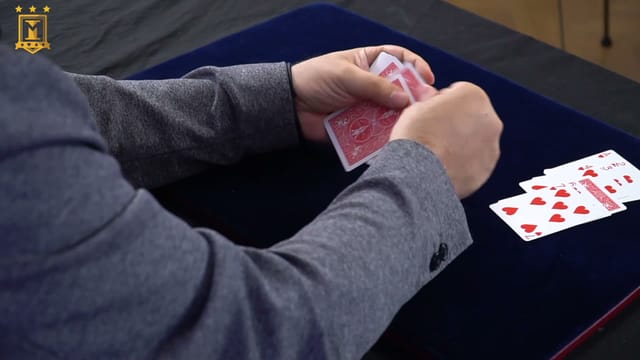
Second Deal: Strike, Push-off, and Diamond Cut Diamond
Manolo Talman studies the second deal as a card magic utility and applies it to Alex Elmsley's Diamond Cut Diamond. The performance uses ten cards of a single suit and a selection to build a transposition, playing verbally between a chosen card and a selected card.
Two Second Deal Methods
The explanation starts with the mechanics grip and the pivot points that allow you to maintain control of the deck. It analyzes how to bring both hands together and apart to share the workload, rather than forcing one hand to do all the heavy lifting.
In the strike second deal, you work on pivoting the top card, finger contact, friction, and recovery. He compares a short clearance of the cards to an excessive push that makes getting back to square one harder. This method is framed for specific spectator angles, watching out for what flashes from behind.
The push-off second deal adds pushing off a double and separating them during the deal. The role of the middle finger, sliding back the top card, a slight bow, and holding the side without death-gripping it are all covered. This variant offers a different kind of cover for surrounded situations, though you still need to check your angles.
Rhythm, Sound, and Practice
The goal is for a fake deal to match the cadence of your normal deals. He suggests getting a feel for your natural dealing rhythm first and practicing with a metronome, making sure not to speed up just to rush through the sleight.
He also compares the sound of both deals. A light tap when dropping the card onto the table helps blend the physical action with the sound. The study includes short runs, resetting your grip, and a gestural out if you accidentally lose your retention.
He talks about applications to forces, card at any number, and spelling tricks. A simplified way to keep the top card is shown as a quick fix, though he recommends putting your time into the technical methods. Third and fourth deals are mentioned as possibilities, without teaching a full masterclass on them.
Diamond Cut Diamond
He walks through the routine from the selection to the climax. You use a packet from the ace to ten of a single suit—hearts in this case. The chosen card is controlled to the bottom using the Kelly Bottom Placement taught in the lesson. Other possible controls are mentioned without bogging down into full extra tutorials.
He teaches two ways to move the selection to the table packet: a transfer attributed to Vernon and an alternative using a tilt cut and spread cover. The explanation ties hand movements into your patter and where you want the spectator's eyes to be.
Whatever number the spectator calls out sets the timing for the count. He shows how to mix in your second deals without breaking your rhythm and how to keep the verbal distinction between the two cards crystal clear.
The finale can be done by pulling the card out from the middle or by having a card show up reversed in the deck using the Hugard turn-over. Both options are explained, along with the visual kicker of separating the cards that seem to swap places.
What You Need
A standard deck of cards and a table are all you need for the lesson. For the routine, pull out the ace through ten of one suit. A physical metronome or an app can help you nail the timing.
You should be comfortable with the dealers grip, breaks, and basic cuts. The lesson teaches the core sleights, but nailing a natural second deal takes reps. The references to gambling cheaters provide good technical background, but everything here is tailored for magic performances.