Full Memorized Deck: Location by Estimation
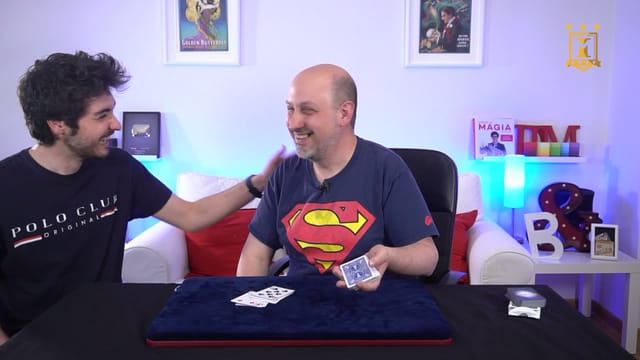
With a full memorized deck you can locate a named card and turn that location into various effects. Woody Aragón covers zone-based estimation of the deck, checking, and correcting small differences. The explanation is accompanied by exercises with a student and performance applications.
Full Order and Shuffles
It is suggested to memorize positions 27 to 52 as a second block that is later joined to the first 26. The advice to study both halves in different settings also aims to preserve the ability to recognize which group each card belongs to.
When working with the 52 cards in order, you must distinguish shuffles that preserve the sequence from those that destroy it. The Charlier and a false cut-based shuffle are explained, with presentation details to show the faces and maintain a feeling of disorder. Those handlings preserve the cyclic order; for certain exercises, you also need to recover the initial reference position.
Applications of knowing the full order are discussed, such as presenting an apparent rapid memorization or recognizing a small removed group. The explanation shows how to recover that group without losing the deck's sequence.
Location by Estimation
The main work consists of approximating a card's position using half and quarter references. The 13th, 26th, and 39th zones are related to packet thickness and the cuts remaining above or below the target are compared.
Estimation is combined with a check peek and a correction of just a few cards. Alternatives to make that correction are studied, such as spreading, shifting a small packet, or using a double cut. The pass is mentioned as an option for the instructor when they have mastered that sleight, without making it a requirement to perform the exercises.
The numbered deck makes the differences visible during practice. The student repeats several locations and receives corrections regarding the amount they cut, the resulting position, and the number of cards they need to shift. The goal is to integrate estimation and correction into a continuous handling.
Making Sense of the Movement
The technique is practiced with patter, not just silently. It is studied how a question, a repetition of what was said, or a reference to possible choices can accompany the adjustment and separate its timing from the reveal.
Hand relaxation and the time a packet is held away from the deck are part of the analysis. The angle of the peek is also reviewed: the reference card must not be accidentally flashed to the audience before the effect.
Applications include transforming an apparent wrong card into the named card and the possibility of producing other reveals once located. The transformation is briefly explained using a double volteo [double lift]. Pocket outs, palms, or the glide are cited possibilities, whose complete execution depends on the technical repertoire you already possess.
Recovering the Initial Reference
To repeat the estimation, you work with the deck restored to its starting position. The class explains how to physically recognize a reference using a breather crimp or a short card, including the corner-short option. The spots where such a reference is useful to recover the beginning or end of the order are compared.
These setups facilitate the return without having to visually search for the card every time. They are shown as handling alternatives; you do not need to prepare all of them at once.
Material and Setup
You need a 52-card deck and knowledge of its memorized order with quick access in both directions. The values and positions in the demonstrations correspond to the order Woody uses; you must work with the exact list of the stack you have learned.
For practice, a numbered deck like the one in the examples can be used. If you choose a short reference, you will need to prepare that card; the class also describes an alternative using a crimp. You should be comfortable with cuts, spreads, and basic breaks. The double volteo [double lift] is only necessary for the transformation application that uses it; estimation and its correction can be practiced separately.