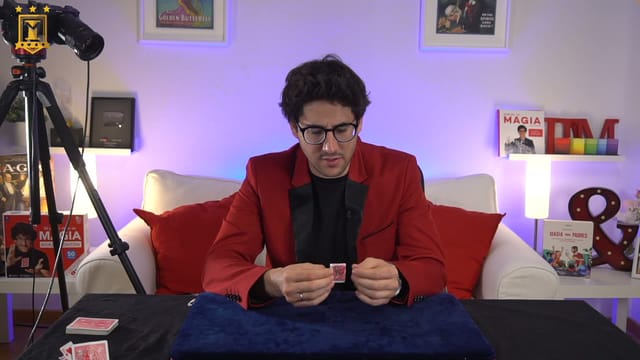
Signed Torn and Restored Card: Torn Handling
Borja Montón presents and explains a signed torn and restored card routine based on Daniel García's Torn, adapted for his own show. The card appears to tear into four pieces and is restored in stages until it can be handed to the spectator. The class combines technical handling with patter and setup choices that allow you to take the routine to the stage.
Patter and Routine Construction
The opening performance uses a personal story about differences and the labels others put on us. Each fold accompanies a part of the story, and the restoration acts as a closing statement to the message. We analyze how to bring intention to a visible setup that, without any patter, might feel slow.
This study differentiates Borja's version from other torn and restored card routines mentioned as references. The teaching focuses on his handling of Torn, featuring successive restorations, a signature, and the final handout. The work of Guy Hollingworth, Dani DaOrtiz, or Shin Lim is cited as alternatives; their methods are not explained.
Preparation, Choice, and Signature
We explain which materials to prepare, how to fold the cards with precision, and how to make the tears easier so the handling doesn't require unnecessary force. The orientation of each piece and the uniformity of the folds are worked on before starting the sequence.
Borja develops two ways to organize the props using the marker's clip, depending on the cap size and how it's held. He also discusses pocket placement in a jacket or case and the convenience of being able to retrieve what's needed with a natural gesture.
We study the card selection, the placement of the signature, and the moment to ask for it. The standard version uses duplicate cards and a signature on the back. We discuss how to adapt certain details when the face is also signed or when different cards are used, without presenting all those options as identical handlings.
Tear and Restorations
The explanation shows the sequence from the magician's perspective and repeats the actions so you can follow the hand placements. It includes the relaxed position of the fingers, being careful not to unnecessarily hide the signature, and coordinating the tear, showing the pieces, and starting the recomposition.
Each restoration is studied separately. We review the grip with the middle finger, the index finger's function, the necessary pressure, and corner control. In the second join, we emphasize letting the card open with very little tension. The last one requires paying special attention to the turn, alignment, and side coverage.
Transitions to the pocket are also explained, along with gestures that keep the action flowing and the final display of the signature. The routine ends by handing out the card and a way to retrieve the marker to add the magician's signature.
Materials and Rehearsal
To follow the main version, you need a deck, two identical cards per performance, a clipped marker, and a pocket or accessible setup spot. Two cards are used up: one is torn, and the other is handed out signed. A one-way force deck is suggested as a practical way to have duplicates ready; no glue or magnets are needed for the taught handling.
It helps to have basic card magic experience and be willing to practice coordinating both hands. The actions are explained, but the clarity of the restorations depends on angle control and piece placement. Borja recommends practicing in front of a mirror and filming yourself to catch any premature openings or visible corners. The closing reviews the complete sequence, from preparation to the final handout.