Double Lift: Technique, Variants, and Ambitious Card
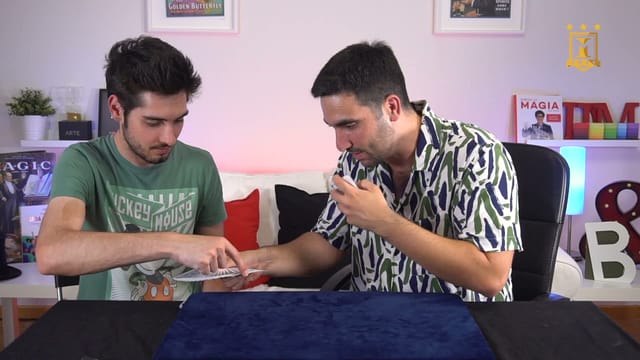
The double lift lets you show and handle two cards as a single one. Hugo Maximiliano covers everything from getting the break to returning the card to the deck, comparing solutions for different situations. The lesson wraps up with handling variants and a live performance and breakdown of a signed ambitious card routine.
The Four Phases of the Double Lift
The explanation breaks the sleight down into four steps: getting a break, turning the cards over, maintaining or regaining control, and turning them back face down. This lets you zero in on what needs practice and keeps the setup from looking fishy.
To get the break, he compares the thumb push-off, the double push-off, and using a card to point. The pinky count is also covered as a more advanced move. Hugo shows how to cut down on excess motion and pick a setup that fits your patter and the natural flow of the trick.
The turnover is studied through grip, pivot points, and how the double lands. The focus stays on keeping it light: a card shouldn't feel heavy, nor should your hand stay stiff throughout the turn. The book-style turnover is explained along with a flick variant.
The catch has several handlings. You can regain your break after a free fall or hold a grip that makes it easy to retake. The natural curl of some decks, slight edges, and the thumb or index finger are compared based on card condition and handling comfort.
Eye Contact, Flow, and Variants
Once the card is shown, how you square it off the deck matters. Hugo analyzes the effect of holding the card still while drawing back the pack so the audience keeps a clear visual memory of the card they just saw.
Pulling a double from the center is explained step-by-step: locating the opening, thumb count, cover, pulling the cards out, and catching them. Different orientations are studied to flow smoothly into the next move. In the routine, this is expanded to a triple extraction, so you'll want to practice both count precision and fluid movement.
The Stuart Gordon handling gets its own section. You'll work on thumb placement, finger support, and finding the sweet spot between enough pressure and zero visible tension. Its main use is shown with small packets, letting you turn a double over without fidgeting. Its use on the deck and for showing a card more vertically is also covered.
A Five-Phase Ambitious Card
A signed card repeatedly jumps back to the top of the deck. The signature makes it instantly recognizable and highlights its uniqueness through repeat performances. Hugo explains the choice and signing, including a way to individualize the card right off the bat, and walks through the five phases of his routine.
The structure builds from an unexpected first rise to a repeat the spectator is already expecting. Then, audience participation ramps up: they get to cut, cover the card, and reveal the result. The analysis ties these changes to the theories the audience builds and the rhythm of surprise, tension, and release.
The top change sneaks in during one of those relaxed moments. You'll look at the initiating hand, body language, and asking the spectator for help. Questions about where the card is are also treated as part of managing misdirection.
The fourth phase introduces a variation using two packets. Alternatives in which the card appears at the bottom or in the mouth are also compared, considering their relationship to the magical gesture and the coherence of the presentation. The bottom appearance assumes a control the student already knows; the TPC is cited as one possibility.
The finale uses a visible bend so that the audience can recognize the instant the card rises. The explanation covers the preparation, tension, orientation toward the spectator, and finger positions to keep the appearance unobstructed. The signed card can be given away as a souvenir.
Material and Practice
You'll need a deck of cards and a Sharpie for the signature. You should be comfortable with mechanics grip, cuts, and breaks. The double lift is taught from the ground up, while the routine layers in timing with the top change and audience reactions.
Practice the setup, the turn, and the catch separately before stringing them together. Then tackle the routine's variants and transitions, checking your angles from the spectator's point of view and making sure a double looks just as casual as a single card.